
Wellness
From Augmentation to Explant: What Plastic Surgery Can and Cannot Solve
Plastic surgeon Dr. Silvia Rotemberg on changing aesthetic goals, explant and lift, implant lifespan, recovery, choosing a surgeon safely and the limits of what surgery can change.
By I Want Her Shoes · February 26, 2026 · 10 min read
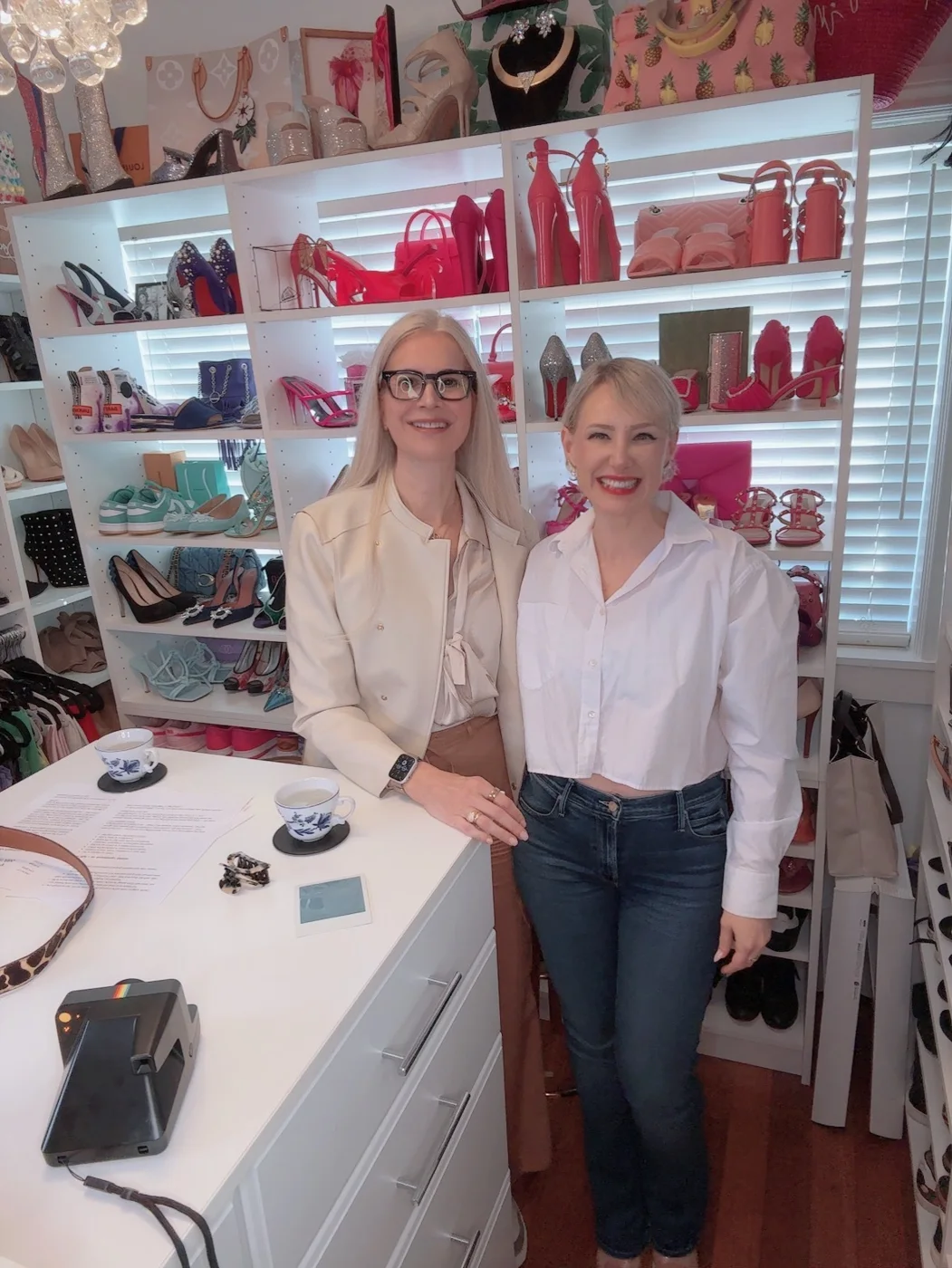
Plastic surgery is often discussed in public through before-and-after photos, trends, and strong opinions. This conversation took a different route. In the episode, the host speaks with Dr. Silvia Rotemberg, a board-certified cosmetic and reconstructive plastic surgeon based in South Miami, about breast augmentation, explant, breast lift, body contouring after weight loss, patient decision-making, and the limits of surgery itself.
The discussion is partly clinical and partly personal. The host recently underwent an explant and breast lift with Dr. Rotemberg and uses that experience to frame broader questions about body image, aging, recovery, and choice. Early in the episode, she states the premise clearly: “This isn't an episode about what you should do.”
That distinction matters. The most useful thread in the conversation is not whether surgery is good or bad. It is how women make decisions, what they should understand before doing so, and what surgery can and cannot change.
How aesthetic goals change over time
One of the clearest points in the episode is that preferences change. The host contrasts her experience in her 20s with what she wanted later in life. In her earlier years, larger implants were associated with a more visible look. Two decades later, her goals were different.
Dr. Rotemberg says that this shift is also visible in her practice. In her view, more women now want a smaller or more natural result, and many ask about fat transfer rather than implants. She explains that fat transfer can work well, but also has limits. It does not usually create the same volume or cleavage as implants in one procedure, and some patients need two or three rounds to approach the result they want.
The episode does not present this as a simple move from one ideal to another. Instead, it frames body decisions as time-dependent. What feels right in one decade may not feel right in another. In the host’s words, “I feel like I mean, everybody now tells me that they think I lost a lot of weight, but I just lost my boobs.”
That line is direct, but it also captures a practical reality: changing breast size affects how the whole body is read, by both the person herself and by others.
The explant decision is not only technical
A central theme of the episode is that explant is not simply a removal procedure. It can involve a shift in self-image, daily habits, clothing, and expectations.
Dr. Rotemberg emphasizes that she does not treat surgery as a standard solution applied the same way to everyone. As she puts it, “We can make our own decisions if we have all the information available to us.” She follows that with another key point: “I think it's not um every procedure is for everyone.”
That approach becomes most important when discussing explant. Dr. Rotemberg says some women are relieved after removing implants, but others are not ready for the change. She notes that some patients struggle when they can no longer see themselves in the same way and says, “I have had patients crying for months.”
This is one of the strongest sections in the conversation because it resists a simple narrative. The current cultural move toward smaller implants or explant does not mean every patient will feel better after following it. Dr. Rotemberg explicitly warns against making the decision because other people are doing it: “It's not what society is doing that you're going to do.”
Her advice is not abstract. She tells patients to step back before deciding: “Go to your little closet, talk to yourself.” The point is that surgery should follow self-assessment, not social pressure.
What patients should know about implants over time
The episode also covers implant lifespan in a straightforward way. Dr. Rotemberg says implants are not permanent and that even the packaging identifies them as devices that do not last forever. Her phrasing is direct: “They're foreign devices. They're they don't last forever.”
This matters because many patients first get implants at a younger age and only think about replacement or removal much later. The host describes waiting close to the end of the expected timeline before addressing her own implants. That experience opens up a broader discussion about rupture, monitoring, and replacement.
Dr. Rotemberg explains that modern imaging has improved surveillance. Mammography and ultrasound can often identify a suspected rupture. She also explains the body’s response to implants in a way that may be useful to patients trying to understand the risks. “Your body knows it's foreign. So, it creates a capsule around it to protect you.”
That capsule, she says, often contains the silicone rather than allowing it to move freely right away. Her view is not that rupture should be ignored, but that it is not always an immediate emergency. The larger point is that patients need a realistic view of maintenance. Breast implants are not a one-time choice with no later decisions attached.
Recovery is usually manageable, but it is not instant
On recovery, the conversation stays practical. Dr. Rotemberg says that, in her experience, explant with lift is generally not a highly painful procedure and that many patients feel close to normal within a short period. “Patients for the most part they almost back to normal after 2 weeks.”
The host says her own recovery was easier than her first augmentation. Earlier surgery had felt heavier and more painful. This time, the discomfort was different, especially once the tape was removed. She recalls, “I felt like somebody put like a brick on my body,” when describing the first augmentation, which makes the contrast with the second procedure clearer.
The conversation also covers scar healing without overstating speed or ease. Dr. Rotemberg notes that scars take time to settle and says, “Any scar any part of the body will take it can take up to 2 years to fully mature.”
This is a useful corrective to the idea that recovery is over when pain decreases. The discussion separates functional recovery from full tissue healing. Patients may feel well before they are fully healed, which is why activity restrictions still matter.
Post-weight-loss surgery changes the body, but not always the mirror image
Another major topic is body contouring after significant weight loss, including patients who have used Ozempic or a similar medication, or undergone bariatric surgery. Dr. Rotemberg describes these cases as more complicated than simple “after” narratives suggest.
She explains that surgery can reshape multiple areas, including the abdomen, arms, thighs, breasts, back, and buttocks. But physical correction does not always produce an immediate shift in self-perception. “Sometimes they still look in the mirror and they see themselves like the same.”
That sentence is one of the more important lines in the episode. It places body contouring in a psychological context without claiming surgery can solve that problem. Dr. Rotemberg also notes that patients with massive weight loss often have skin that no longer contracts well. In her words, “It lost its ability to contract.”
She describes the practical effect of this during and after surgery. Even when tissue is tightened in the operating room, some looseness can remain once swelling changes the shape of the area again. For patients who have had gastric bypass or gastric sleeve surgery, she adds another variable: absorption may be limited, which can affect recovery and tissue quality.
This part of the episode broadens the discussion beyond breast surgery. It shows how plastic surgery often sits at the intersection of anatomy, healing, nutrition, and self-perception.
Shame, stigma, and younger patients
The episode also addresses stigma directly, especially for younger women seeking surgery for issues such as breast asymmetry or enlarged labia. Dr. Rotemberg says these consultations often involve mothers who do not understand why surgery is being considered so early.
Her response is not that surgery is always necessary. It is that the patient’s current life matters. Waiting until after children or some later milestone may not address the actual problem the person is living with now. On the effect of earlier treatment in some cases, she says, “It empowers them. It gives them, you know, their self-esteem really rises.”
This section is useful because it moves the conversation away from vanity as the only explanation for surgery. In the examples Dr. Rotemberg gives, the issue is often discomfort, asymmetry, sexual self-consciousness, or daily distress. The question is not whether someone should have a perfect body. It is whether a specific physical issue is affecting how they move through life.
What safe decision-making looks like
For readers who are less interested in theory and more interested in what to check before surgery, the episode offers a short but useful framework.
First, Dr. Rotemberg says the relationship with the surgeon matters. “If something goes wrong you need to be able to hold hands with that surgeon.” The line is simple, but the point is structural. A patient is not only choosing a result. She is choosing a person who will be responsible if the process becomes more complex than expected.
Second, she advises patients to confirm that the surgeon has hospital privileges: “Make sure that you know they the the physician has hospital privileges.” Her reasoning is that if a complication requires hospital care, the original surgeon needs to be able to continue treating the patient there. Otherwise, care may be handed off to someone else.
Third, she raises the issue of anesthesia, especially in markets where cosmetic surgery is heavily promoted. Patients should know who is providing anesthesia and whether a dedicated anesthesiologist is present. She also mentions board certification, experience with the procedure itself, and reviews.
The host adds a point that is less technical but still relevant: “This is like your own body.” In context, she is arguing against choosing a surgeon based mainly on low price. The episode does not turn that into a slogan. It uses it as a reminder that cost-cutting can create risk if it comes at the expense of training, oversight, or continuity of care.
What AI may change, and what it may not
Late in the episode, the conversation shifts to AI and medicine. Dr. Rotemberg does not make large claims about plastic surgery itself being automated soon, but she does say plainly, “AI is going to change medicine. It's changing. It has changed already.”
Her example comes from fertility medicine. She describes a system that helps identify sperm in cases where none had previously been found and says, “The AI always finds one sperm that can fertilize an egg.” That is her description from the conversation rather than an independently verified claim, and the discussion presents it as an example of how AI can extend what clinicians are able to detect and act on.
She also notes that robotic mastectomies and reconstruction already exist. At the same time, she is cautious about the idea of robots taking over routine plastic surgery. She mentions having seen a hair transplant robot years earlier, but says it was too slow to be practical.
The value of this section is not prediction. It is that it frames AI as a support tool for diagnosis, planning, and research rather than a replacement for judgment and hands-on work in the near term.
What surgery cannot fix on its own
The most consistent point in the episode is also the most basic: surgery has limits. Dr. Rotemberg says this directly when discussing women who feel disconnected from their bodies. “And then go and have surgery because if you're disconnected,” she says, before adding the harder part: “You can have 10,000 surgeries.”
That line marks the boundary of the conversation. Surgery can change tissue, size, shape, and symmetry. It cannot, on its own, produce durable confidence in someone who is already stuck in a cycle of dissatisfaction. Dr. Rotemberg says that in some cases she turns patients away or tells them to seek another opinion.
She makes a similar point about breast reconstruction after cancer. In one of the clearest statements in the episode, she says, “We are never able to give back to you what you used to have.” Reconstruction can help, but it cannot erase the fact of loss. She adds, “It's mental. It's a lot of mental work.”
That section may be the most important one in the full discussion. It distinguishes elective cosmetic surgery from reconstructive surgery after disease, and it shows that even technically successful surgery may not fully resolve what a patient is carrying.
A more useful way to talk about plastic surgery
The episode closes where it began: with personal choice. The host describes her own shift from augmentation to explant and lift as more than physical. “My own journey also for my augmentation to explant to lift wasn't just physical, it was emotional, spiritual, and honestly freeing.”
Dr. Rotemberg’s position is more restrained but consistent throughout. She does not argue that women should avoid surgery, and she does not argue that they should pursue it. Her standard is whether the patient understands the tradeoffs, is emotionally prepared for the result, and is making a decision that fits her own life rather than a public trend.
That is why the most useful closing line in the episode is also the simplest: “Have it with yourself first before making any big decisions.”
Listen or watch the conversation